
The Ultimate Guide to Handyman Costs
Understanding handyman costs is essential for both homeowners planning projects and contractors setting competitive rates. In 2025, handyman pricing has evolved to reflect market demands, regional variations, and the complexity of modern home maintenance needs.

Handyman Hourly Rates Overview
The national average for handyman services typically ranges between $50 to $125 per hour, with most professionals charging around $60 to $85 per hour. However, these rates vary significantly based on several key factors.
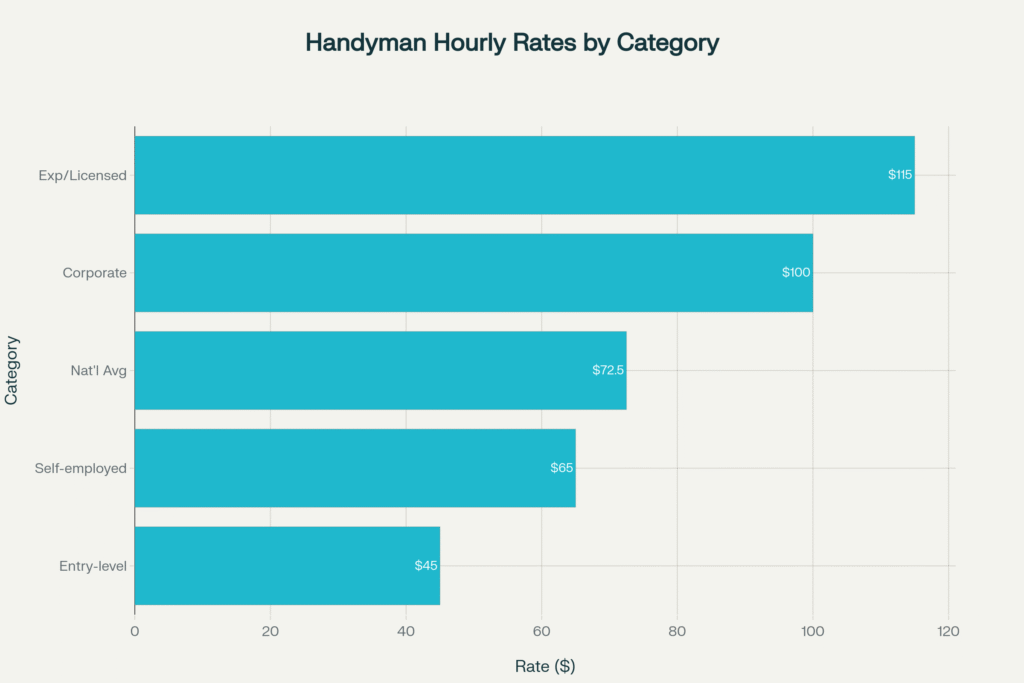
Handyman Hourly Rates by Category (2025)
Rate Categories by Experience and Business Type
Self-Employed Handymen charge between $50-$80 per hour, offering more affordable rates due to lower overhead costs. These independent contractors typically provide flexible pricing and personalized service.
Corporate Handymen command higher rates of $75-$125 per hour, reflecting their professional backing, insurance coverage, and structured business operations. Corporate rates can be 15-20% higher than independent contractors.
Entry-Level Handymen typically charge $40-$50 per hour as they build experience and establish their reputation. While more affordable, they may require more time to complete complex tasks.
Licensed and Experienced Handymen can charge $100-$130 per hour or more, particularly for specialized work requiring permits or technical expertise.
Common Job Costs and Pricing Structure
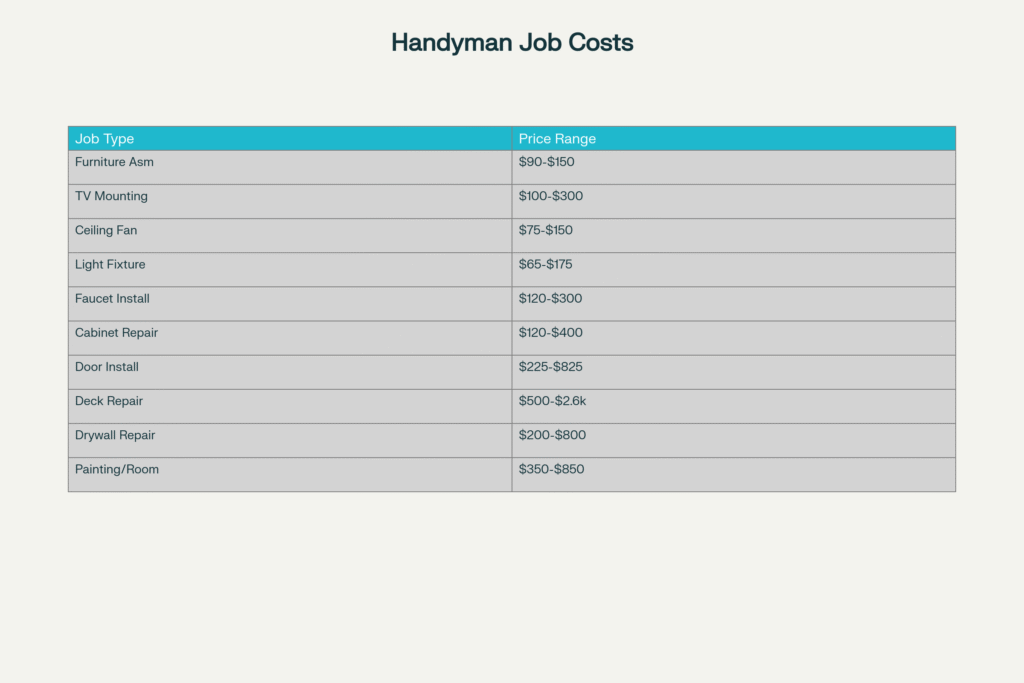
Common Handyman Job Costs (2025)
Project Size Classifications
Small Projects (1-2 hours) typically cost $75-$250 and include simple tasks like hanging pictures, minor repairs, or basic maintenance.
Medium Projects (2-5 hours) range from $250-$500 and involve more complex work requiring power tools or moderate skill levels.
Large Projects (5+ hours to multiple days) can cost $500-$1,500 or more for extensive repairs, installations, or renovations.
Pricing Models: Hourly vs. Flat Rate
Hourly Pricing Benefits
- Flexibility for unpredictable jobs where scope may change
- Protection against unexpected complications that extend project time
- Transparency in billing for actual time worked
- Ideal for diagnostic work or projects with unknown variables
Flat Rate Pricing Advantages
- Predictability for customers who want fixed costs upfront
- Efficiency rewards – skilled handymen can profit from completing jobs quickly
- Customer preference – many clients prefer knowing the total cost in advance
- Better for standardized tasks with predictable timeframes
Factors Affecting Handyman Costs
Geographic Variations
High-Cost Areas like New York, California, and Massachusetts see rates 30-50% higher than national averages due to increased living costs and overhead expenses.
Rural Areas typically offer rates 10-20% below national averages, though travel charges may apply for distant job sites.
Urban vs. Rural Pricing: Metropolitan areas command premium rates due to higher demand, competition, and operating costs.
Experience and Licensing Impact
Licensed Handymen can charge premium rates, especially for electrical, plumbing, or HVAC work requiring permits. Licensing costs in Florida range from $95-$205 for initial certification, plus ongoing renewal fees.
Insurance Requirements add to operational costs but provide liability protection. Florida handymen typically pay around $98/month for general liability and $45/month for workers’ compensation insurance.
Material Costs and Markup
Standard Markup ranges from 20-50% on materials to cover procurement time, transportation, and carrying costs. Many handymen use a tiered markup system:
- Small items ($0-$5): Higher percentage markup
- Medium items ($5-$15): 70% markup (most common range)
- Larger items ($15+): Lower percentage markup to remain competitive
Shopping Time is typically billed at the handyman’s hourly rate, as material procurement is part of the service delivery.
Minimum Charges and Service Fees
Most handymen implement minimum service fees equivalent to 1-2 hours of work, typically $75-$200, to cover travel time and basic overhead costs. This ensures profitability on small jobs and compensates for time spent traveling to job sites.
Trip charges of $30-$80 may apply for material runs or distant locations, particularly in rural areas where travel time significantly impacts the workday.
Regional Cost Analysis
Florida Market Specifics
In Sarasota, Florida, handyman wages average around $24.56 per hour for employed workers, though independent contractors charge significantly more. Florida’s licensing requirements for jobs over $2,500 create a tiered market where licensed professionals command premium rates.
National High and Low Markets
Highest-Paying States:
Lowest-Paying States:
- West Virginia: $39,900 annual average
- Mississippi: $40,580 annual average
- Oklahoma: $40,710 annual average
Seasonal Pricing Strategies
Peak Season (May-September) allows for higher rates due to increased demand for outdoor projects and home improvements. Handymen can implement seasonal pricing adjustments of 10-15% during busy periods.
Off-Season Pricing may include discounts or promotions to maintain steady work during slower winter months, particularly for indoor projects and maintenance work.
Cost Calculation Formula for Handymen
To establish profitable pricing, handymen should calculate their true hourly need using this framework:
- Fixed Monthly Expenses: Tools, vehicle, insurance, licenses, living expenses
- Working Hours: Actual billable hours (typically 20-30 hours/week for independent contractors)
- Overhead Factor: Add 20-30% for business growth and unexpected expenses
- Profit Margin: Additional 20-30% above costs for sustainability
Tips for Competitive Pricing
Market Research: Regularly survey competitor rates to ensure pricing remains competitive while maintaining profitability.
Value Communication: Clearly explain what’s included in pricing – labor, basic materials, cleanup, and any guarantees.
Bundling Opportunities: Offer package deals for multiple services or neighborhood group rates to increase job efficiency and customer value.
Transparency: Provide itemized estimates showing labor, materials, and any additional fees to build trust and justify pricing.
Understanding handyman costs in 2025 requires considering multiple variables from regional economics to project complexity. Whether you’re hiring a handyman or establishing rates as a service provider, these comprehensive pricing guidelines ensure fair, competitive, and profitable transactions that benefit both parties.