
Ultimate Guide to Fence Costs in Florida
Installing a fence in Florida involves unique considerations due to the state’s tropical climate, hurricane risks, and specific regulations. Based on comprehensive 2025 data, homeowners can expect to pay $20 to $60 per linear foot for most fence installations, with total project costs ranging from $1,500 to $30,000 depending on materials, size, and complexity.
Material Costs and Options
Popular Fence Materials in Florida
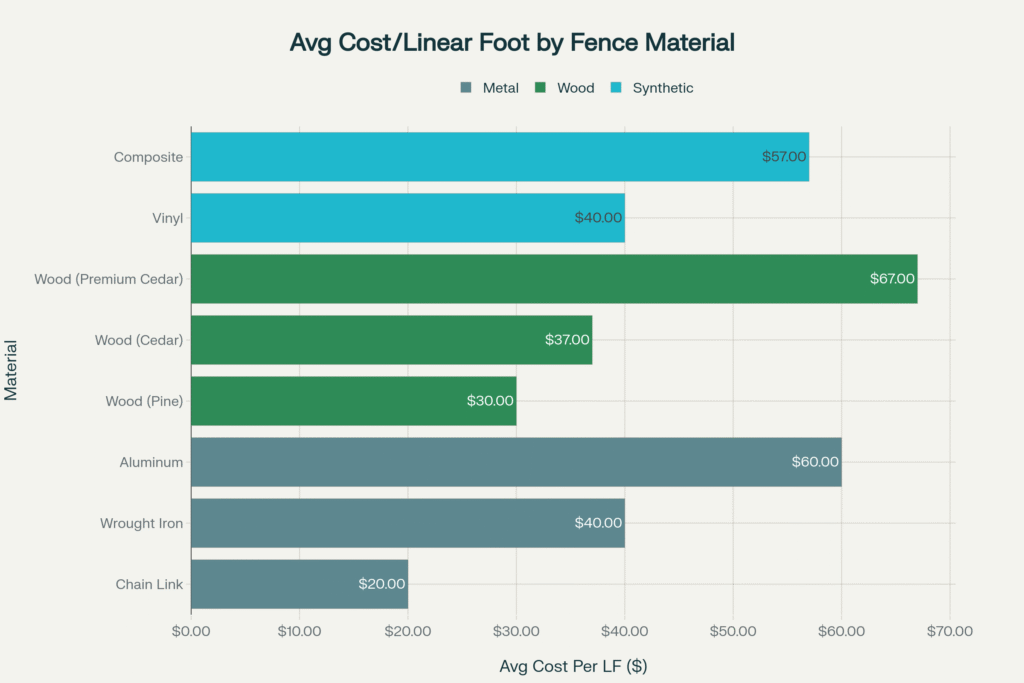
Average fence material costs per linear foot in Florida (2025)
Chain Link Fencing: The most economical option at $8-$40 per linear foot ($20 average), chain link offers excellent hurricane resistance due to its open design that allows wind to pass through. Galvanized steel construction provides corrosion resistance essential in Florida’s humid, salty environment.
Wood Fencing: Costs vary significantly by wood type:
- Pressure-treated pine: $15-$45 per linear foot
- Cedar: $35-$40 per linear foot
- Premium Western red cedar: $45-$90 per linear foot
Wood requires regular maintenance in Florida’s climate, with cedar performing better than pine due to natural rot resistance.
Vinyl Fencing: Ranging from $15-$65 per linear foot ($40 average), vinyl offers excellent durability and low maintenance. Modern vinyl fences can withstand Florida’s humidity and UV exposure without warping or fading.
Aluminum Fencing: Costs $20-$100 per linear foot ($60 average) but provides exceptional hurricane resistance and longevity. The open picket design allows wind passage while powder coating prevents corrosion.
Wrought Iron: Premium option at $25-$55 per linear foot, offering maximum durability and security. Requires professional installation but can last 50+ years with proper maintenance.
Fence Types and Height Considerations
Privacy Fences
Specialty Fencing
- Pool fences: $20-$45 per linear foot (minimum 4-foot height required by Florida law)
- Picket fences: $15-$35 per linear foot
- Split rail fences: $12-$25 per linear foot
Project Size and Total Costs
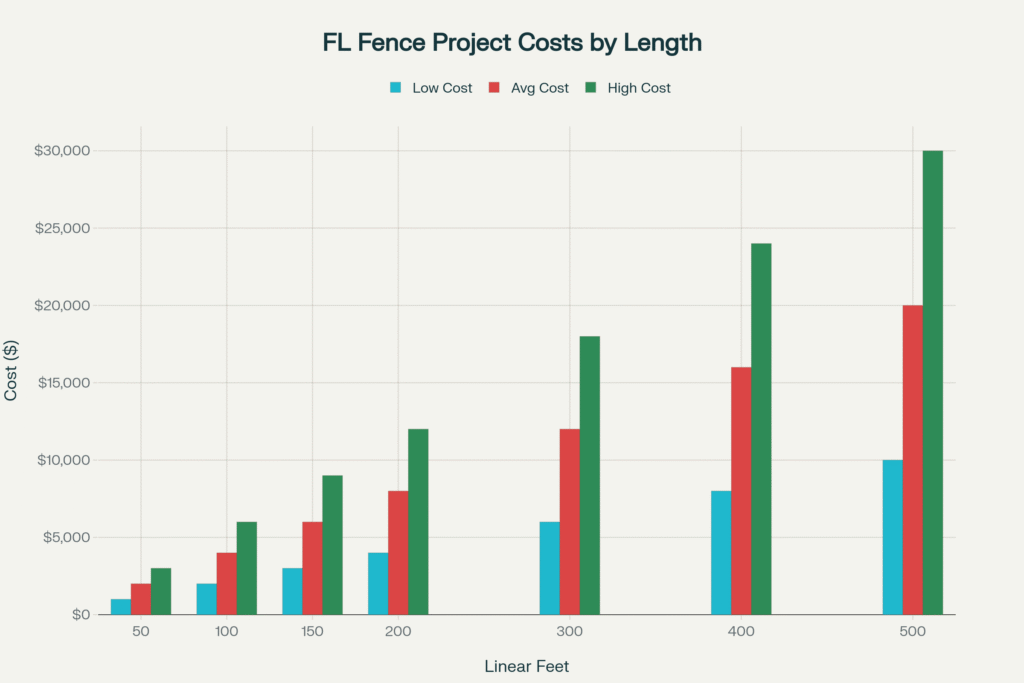
Florida fence project costs by linear footage (2025)
Total fence installation costs in Florida depend heavily on project scope:
- 50 linear feet: $1,000-$3,000
- 150 linear feet: $3,000-$9,000
- 200 linear feet: $4,000-$12,000
- 300 linear feet: $6,000-$18,000
- 500 linear feet: $10,000-$30,000
Florida-Specific Cost Factors
Hurricane Code Compliance
Properties in Miami-Dade and Broward counties designated as “high-velocity hurricane zones” must follow stricter 2001 Florida Building Code requirements. This includes:
- Closer post spacing (every 4-6 feet for wood, every 10 feet for chain link)
- Heavier-duty materials and construction
- Additional 10-20% material costs for compliance
Permit Requirements
Most Florida municipalities require permits for fences over 4-6 feet tall. Permit costs range from:
Labor Costs
Professional installation in Florida averages $44-$65 per hour. Labor typically accounts for 50-60% of total project costs, with installation ranging from $10-$30 per linear foot depending on complexity.
Gate and Automation Costs
Manual Gates
Standard fence gates add $120-$480 to project costs depending on size and material. Pool fence gates require self-closing, self-latching mechanisms with releases positioned 54+ inches high.
Automatic Gates
Automatic driveway gates range from $1,525-$5,135 installed, with premium systems reaching $10,000+. Components include:
HOA and Regulatory Considerations
Homeowners Association Rules
Most Florida HOAs regulate fence installation through architectural review processes. Common restrictions include:
- Height limits: 6 feet maximum in backyards, 3-4 feet in front yards
- Material specifications: Often prohibiting chain link while requiring wood, vinyl, or aluminum
- Approval timeline: 1-6 weeks for review and approval
Pool Safety Requirements
Florida’s Residential Swimming Pool Safety Act mandates 4-foot minimum barriers around all pools. Acceptable options include:
- Perimeter fencing with self-closing gates
- Pool covers meeting safety standards
- Door/window alarms
- Self-latching devices 54+ inches high
Climate Considerations and Material Selection
Hurricane Resistance Rankings
- Chain link and aluminum: Excellent wind resistance due to open designs
- Vinyl with reinforcement: Good flexibility and impact resistance
- Wood: Poor performance in high winds, especially solid privacy panels
Saltwater and Humidity Resistance
Coastal properties require materials resistant to salt corrosion:
- Aluminum with powder coating: Superior corrosion resistance
- Vinyl: Unaffected by saltwater or humidity
- Galvanized chain link: Good rust resistance
- Wood: Requires frequent sealing and treatment
Maintenance and Long-Term Costs
Annual Maintenance Expenses
- Wood fences: $200-$500/year (cleaning, staining, repairs)
- Vinyl/Aluminum: $50-$150/year (cleaning only)
- Chain link: $100-$300/year (rust prevention, repairs)
Common Repair Costs
- Post replacement: $144-$480
- Panel replacement: $180-$480
- Gate repairs: $120-$480
- Wood rot repair: $180-$600
Money-Saving Strategies
Timing and Planning
- Off-season installation: Lower labor costs during cooler months
- Multiple quotes: Compare 3-5 contractor estimates
- Material selection: Balance upfront costs with long-term maintenance
DIY Considerations
While DIY installation can save 30-50% on labor costs, Florida’s specific building codes and permit requirements often necessitate professional installation, especially for pool fences and hurricane-zone properties.
Regional Cost Variations
Fence costs vary across Florida metros:
- Orlando: $1,600-$4,250 for standard installations
- Miami-Dade: Premium pricing due to hurricane codes and high demand
- Southwest Florida: $1,500-$4,500 for residential projects
- Central Florida: Moderate pricing with good contractor availability
Conclusion
Florida fence installation requires careful consideration of materials, regulations, and climate factors. While initial costs range from $20-$60 per linear foot, selecting appropriate materials for hurricane resistance and low maintenance can provide better long-term value. Always obtain multiple quotes, verify contractor licensing, and ensure compliance with local permits and HOA requirements for a successful fence installation project.