
The Ultimate Guide to Siding Costs
Siding replacement is one of the most impactful home improvement investments you can make, significantly enhancing both curb appeal and property value. The national average cost for home siding replacement is $11,500 to $17,200 for a typical 2,000 square foot home, though costs can range from as low as $2,560 to as high as $45,000 depending on material choices and project complexity.

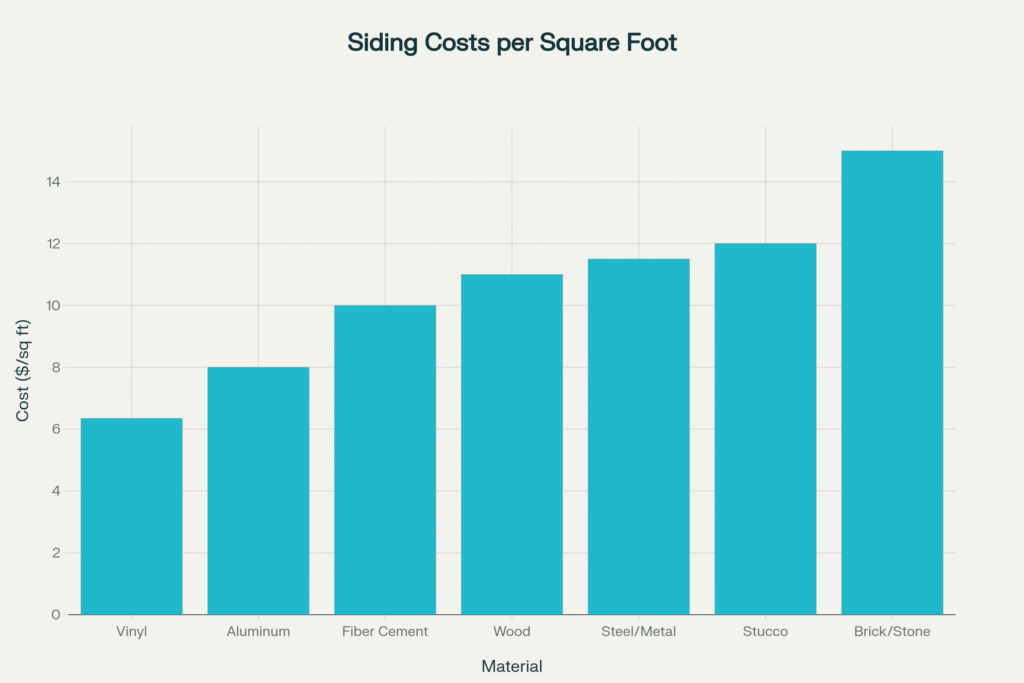
Siding Material Costs: Average Cost Per Square Foot Installed (2025)
Siding Cost Breakdown by Material
Vinyl Siding
Cost: $4.50-$8.20 per square foot installed
Vinyl remains the most popular and budget-friendly siding option, costing an average of $15,315 for a complete installation. The material offers excellent value with minimal maintenance requirements and comes in a wide variety of colors and styles. Economy-grade vinyl starts at $3.50-$5.50 per square foot, while premium insulated options can reach $7-$13 per square foot.
Fiber Cement Siding
Cost: $4.70-$15 per square foot installed
Fiber cement siding, including popular brands like James Hardie, provides an excellent balance of durability and aesthetics. Installation typically costs $13,700-$25,000 for a 2,500 square foot home. This material offers superior weather resistance and can last 30-50 years with minimal maintenance.
Wood Siding
Cost: $6-$16 per square foot installed
Wood siding costs vary significantly based on species and style. Cedar siding ranges from $6-$16 per square foot, while pine starts at $3-$11 per square foot. The total project cost for an average home ranges from $8,500-$31,500.
Aluminum Siding
Cost: $6-$10 per square foot installed
Aluminum siding offers durability and energy efficiency at $12,000-$25,000 for a typical 2,000-2,500 square foot home. Labor costs range from $3-$6 per square foot, with materials adding another $3-$4 per square foot.
Stucco Siding
Cost: $7-$17 per square foot installed
Stucco installation is ideal for dry climates and costs $14,000-$34,000 for a 2,000 square foot house. Traditional stucco ranges from $6.36-$9.66 per square foot, while synthetic EIFS systems can cost $10-$18 per square foot.
Metal/Steel Siding
Cost: $7-$16 per square foot installed
Steel siding offers exceptional durability and modern aesthetics at $14,000-$32,000 for a 2,000 square foot home. Aluminum panels cost $6-$10 per square foot, while steel ranges from $7-$16 per square foot.
Brick and Stone Veneer
Cost: $8-$22 per square foot installed
Premium materials like brick veneer cost $8-$18 per square foot, while stone veneer ranges from $13-$22 per square foot. Full brick installation can reach $16,000-$44,000 for a typical home.
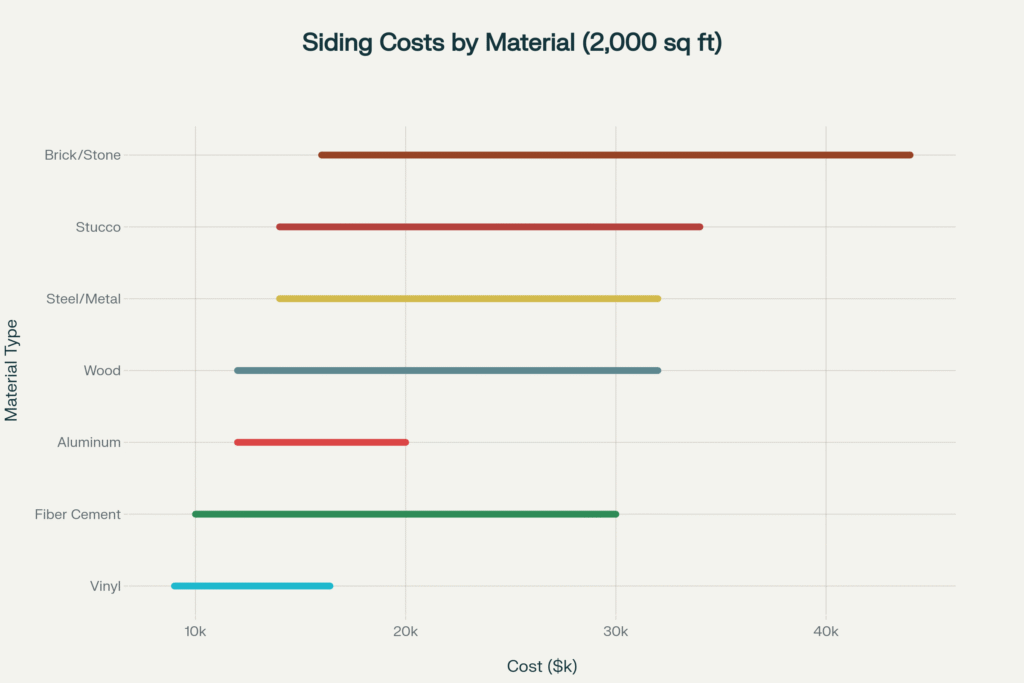
Total Siding Installation Costs for 2,000 Square Foot Home by Material (2025)
Additional Cost Factors
Labor Costs
Professional installation typically accounts for 40-60% of total project costs. Labor rates range from $1.50-$4.50 per square foot, varying by region and project complexity. Specialized work on multi-story homes or complex architectural features increases labor costs by 15-30%.
Removal and Disposal
Removing existing siding adds $0.75-$2.00 per square foot to the total cost. Asbestos siding removal requires specialized handling at $5-$15 per square foot. Standard siding disposal costs $0.60-$1.80 per square foot.
Permits and Additional Materials
Building permits typically cost $200-$500 depending on local requirements. Additional materials include:
- House wrap: $150-$300
- Flashing: $50-$200
- Trim work: $1-$5 per linear foot
- Insulation backing: $1-$4.50 per square foot
Home Size Impact on Costs
Siding costs scale directly with home size, as pricing is calculated per square foot of exterior coverage:
- 1,500 sq ft home: $7,500-$23,000
- 2,000 sq ft home: $10,000-$30,000
- 2,500 sq ft home: $12,500-$37,500
- 3,000 sq ft home: $15,000-$45,000
Return on Investment
Siding replacement offers exceptional ROI compared to other home improvements:
The 2023 Remodeling Cost vs. Value Report ranks vinyl siding replacement 5th out of 23 home improvement projects for return on investment.
Energy Efficiency Benefits
Modern siding materials significantly improve home energy efficiency:
- Insulated vinyl: R-value up to 4.0, reducing energy costs by 11-20%
- Fiber cement with backing: R-value around 2.5
- Steel siding: Reflective properties reduce cooling costs
Energy-efficient siding can reduce heating and cooling costs by 15-20% annually.
Maintenance Considerations
Ongoing maintenance costs vary significantly by material:
- Vinyl: Minimal maintenance, occasional cleaning
- Wood: Staining every 2-5 years, annual inspection
- Fiber cement: Repainting every 10-15 years
- Metal: Virtually maintenance-free
- Brick/Stone: Minimal maintenance, occasional repointing
Regional Cost Variations
Siding costs vary by geographic location due to:
- Local labor rates and availability
- Material transportation costs
- Regional building code requirements
- Climate-specific material needs
Urban areas typically see 20-30% higher costs than rural regions.
Professional vs. DIY Installation
While DIY installation can save $2-$4 per square foot in labor costs, professional installation is recommended for:
- Warranty protection
- Code compliance
- Proper water barrier installation
- Safety considerations for multi-story homes
Making the Right Choice
When selecting siding, consider:
- Budget constraints and long-term costs
- Climate requirements and weather resistance
- Maintenance preferences and capabilities
- Aesthetic goals and architectural style
- Energy efficiency priorities
- Resale value considerations
The best siding choice balances upfront costs with long-term value, durability, and maintenance requirements. Vinyl offers the best entry-level value, while fiber cement provides premium durability. For luxury applications, brick and stone veneer deliver unmatched longevity and curb appeal.
Professional consultation ensures proper material selection, installation quality, and maximum return on your siding investment.